
Registered Charity in Ireland | RCN: 20141004

Projects & conservation

Three programmes, one long-term aim

Everything we do falls under historic garden restoration, native habitat creation, or the teaching of traditional horticultural craft. Each programme has a written method statement, an annual budget approved by the board, and volunteers who show up in the rain.

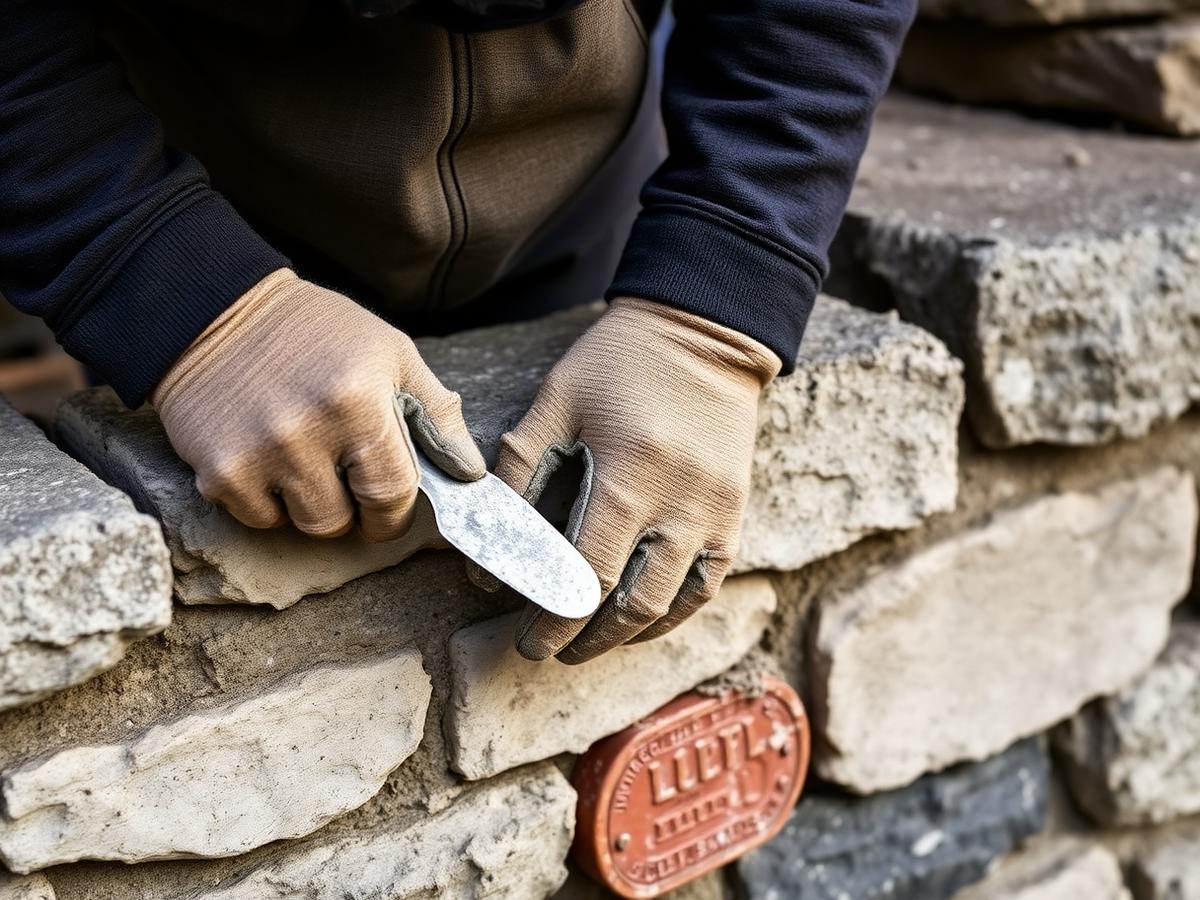
A mason repointing an historic garden wall with lime mortar

Programme one

Historic walled garden restoration

Our walled garden work begins with survey, not with tools. Each site receives a measured drawing, a photographic condition record of every wall elevation, and a phased repair schedule signed off by a conservation-experienced mason before a single stone is lifted.

Structural masonry repair

We repoint exclusively in hot-mixed or natural hydraulic lime mortars matched to the original bedding material, never cement, which traps moisture and spalls the stone face. Copings are re-set on lime with lead soakers where the original detail survives. Collapsed sections are rebuilt with the fallen stone recovered on site, laid to the original coursing pattern, and left legibly distinguishable from historic fabric. Ivy is severed at the base and left to die back over eighteen months rather than being torn off, which would pull the wall face with it.

Original soil revitalisation

Two centuries of manuring produce a deep, friable garden loam that cannot be bought back. We test for pH, phosphorus, potassium and organic matter across a grid, decompact by hand-forking rather than rotavating, and rebuild structure with on-site leaf mould, composted bracken and well-rotted stable manure from neighbouring farms. Green manures — field beans, phacelia, crimson clover — hold the beds through winter. No routine pesticide or synthetic fertiliser is used on any site we manage.

Heirloom seed preservation

Our seed library holds 31 kitchen-garden cultivars recovered from surviving plants, estate seed lists and local growers, including two pea varieties and a kale that we have not been able to match to any commercial listing. Seed is grown out on a rotation to maintain viability, cleaned and stored cool and dry, and shared free with community gardens and schools. Recovered fruit trees are propagated by whip-and-tongue grafting onto MM106 and M25 rootstock at our Shanaglish nursery.
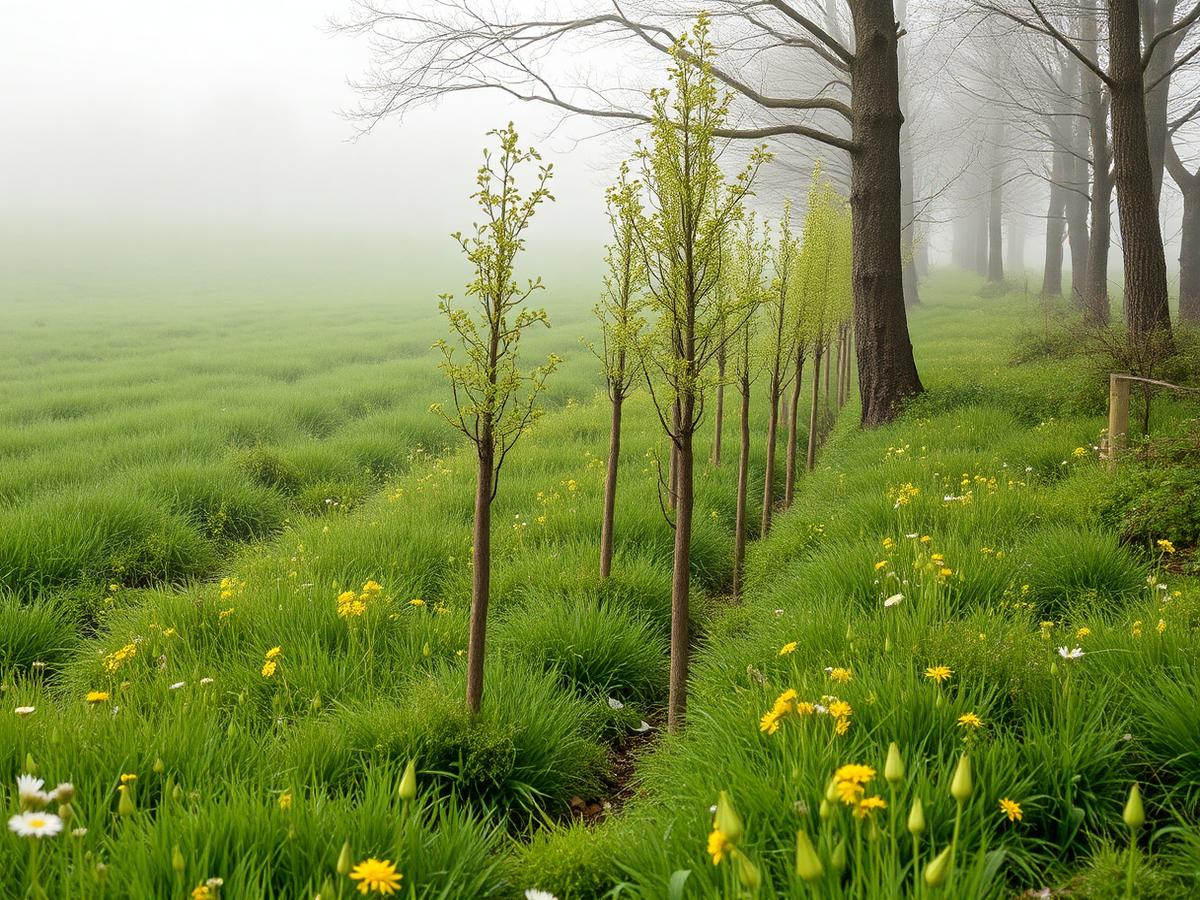
Young native trees planted along an Irish woodland corridor

Programme two

Native woodland & pollinator corridors

Restored gardens are islands unless something connects them. Since 2019 we have worked with farmers and landowners across Beagh, Kiltartan and Shanaglish to plant and manage native corridors linking woodland remnants, old orchards and estate demesnes.

  • Species and provenance. Sessile and pedunculate oak, hazel, holly, rowan, blackthorn, hawthorn, guelder rose, spindle and alder buckthorn — all grown from Irish-collected seed, much of it at our own nursery. We plant no non-native ornamentals in corridor schemes.
  • Establishment. Bare-root whips planted November to March, biodegradable guards where browsing pressure demands it, mulch mats of on-site material, and a three-year watering and weeding commitment with a target survival rate above 85 per cent.
  • Pollinator provision. Wildflower field margins sown with Irish-origin seed, reduced-mowing agreements on verges, bare-ground nesting scrapes for solitary bees, and retained standing deadwood.
  • Monitoring. Fixed-point photography, annual survival counts, and June pollinator transects walked by trained volunteers following All-Ireland Pollinator Plan methodology. Results are published in our annual report.
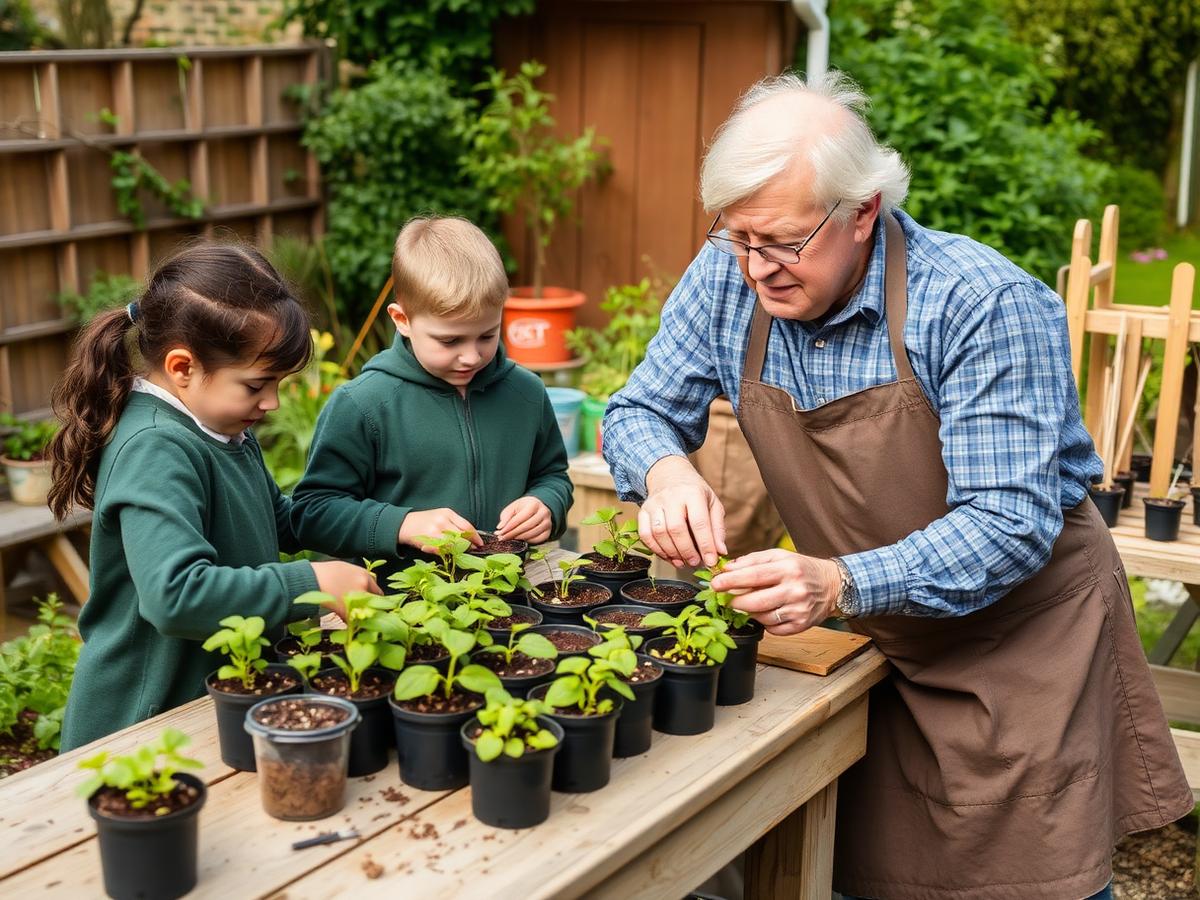
Children potting seedlings with a gardener at an outdoor workshop

Programme three

Educational workshops & field days

Skills are the part of heritage most easily lost and most cheaply saved. All of our education work is delivered free of charge and funded from general donations.

School visits

Eleven primary schools in Gort, Loughrea, Kinvara and Peterswell take part in our spring and autumn programme: seed sowing, bulb planting, hedgerow identification walks and a summer harvest day inside the walled garden. Sessions are curriculum-linked to SESE and are delivered by Garda-vetted volunteers under our safeguarding policy.

Traditional gardening masterclasses

Six Saturdays a year, open to anyone over sixteen: winter fruit-tree pruning and formative training of espaliers; whip-and-tongue and cleft grafting; hot-bed and cold- frame propagation; seed saving and cleaning; lime mortar mixing and pointing; and hedgelaying in the midland style. Numbers are capped at fourteen so that everyone works rather than watches.

Volunteer field days

Every second Saturday from September to April, 10am to 3pm, with tools, gloves, a safety briefing and lunch provided. No experience is required and no commitment is asked beyond the day itself. Field days are risk-assessed in writing, and a first-aider is present at all times.